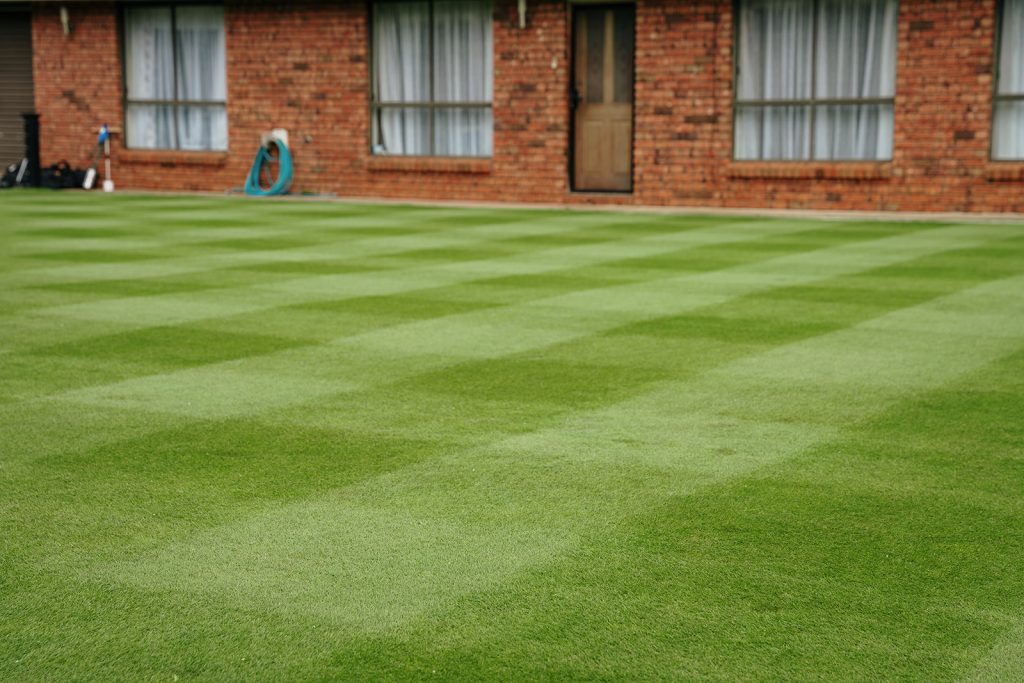
Lawn Maintenance
To get the most out of your lawn it is essential that a reasonable effort is made towards maintaining it. Often homeowners are daunted by the task of having to maintain their lawn through the thought of hard work and not really knowing what to do. Well, its not as difficult as you may think. As a homeowner not only does your family & friends get to enjoy the benefits of your hard work but having a well-maintained lawn also increases the value of your property!
Mowing
Adopting an ongoing regular mowing program is the basis for any good lawn maintenance program. Other than achieving the obvious of keeping your lawn in shape and well presented, mowing also achieves the following;
- Increases the density of your lawn
- Encourages your lawn to grow sideways, and less upright growth, therefore encouraging it to spread
- Encourages the roots to grow deep
- Helps to thin out weeds and mowing actually removes some weed species
- Prevents the development of weed seeds further reduces the spreading of weeds in your lawns and garden beds
- Increases the threshold of insect attack – the higher the density achieved through mowing the less effective insect attack will be
Mowing can be carried out with or without a catcher. If weeds are present within your lawn it’s best to mow your lawn with a catcher – catching your grass clippings reduces the spread of weeds through the mower not distributing weed seeds. Mowing with a catcher will also mean clippings will not be returned to the surface therefore providing a cleaner, well-presented finish.
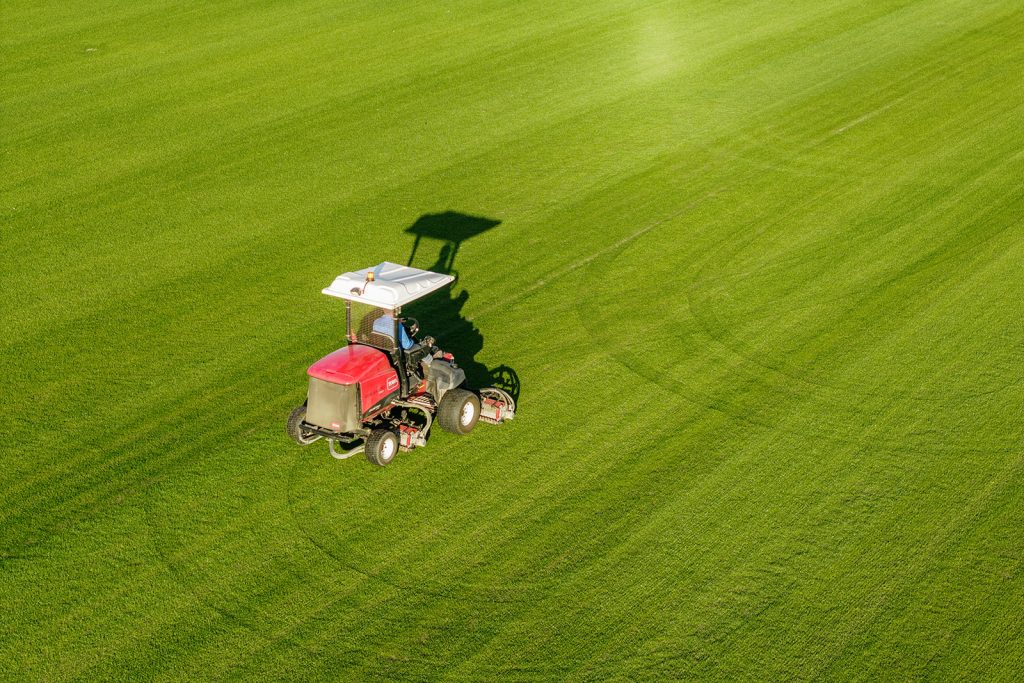
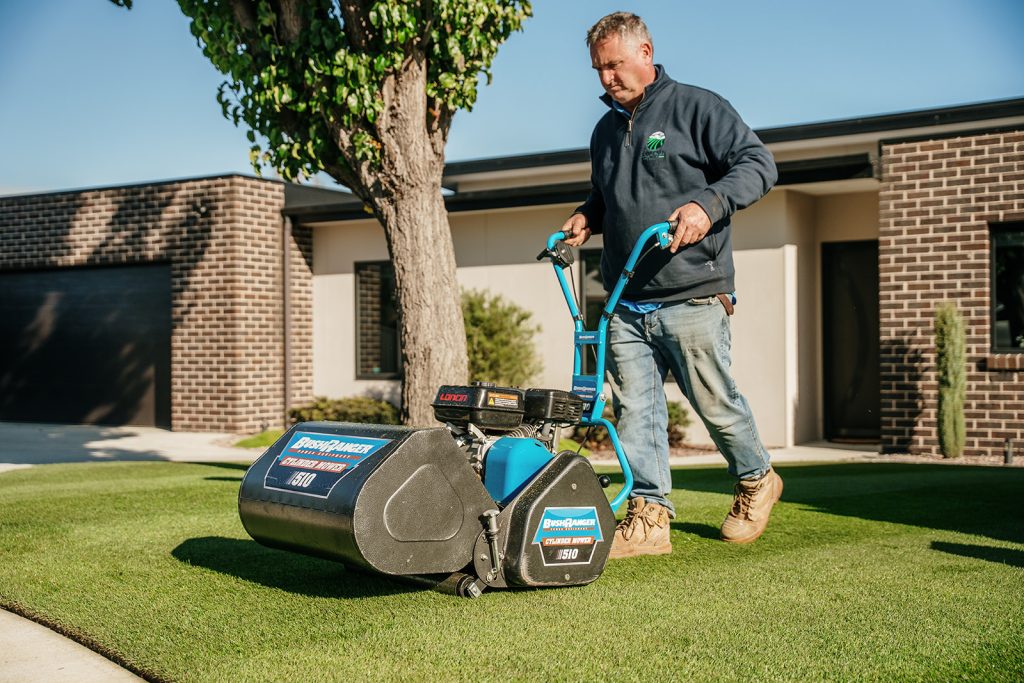
Other important factors to consider with mowing;
- Mow regularly and adjust the frequency of mowing to the season—typically 2–3 times a week in spring and down to about 1-2 times per month mid‑winter. Monitor your lawn’s growth to know when it needs mowing.
- Ensure your mower blades are sharp and replace them when worn. This ensures a clean cut resulting in your lawn presenting well with reduced opportunity for disease attack.
- Never remove more than one third of the grass length in any one mowing. Reduce the cutting height over several mowings until the desired height is reached. This keeps your lawn healthy while reducing the cutting height.
- If any area within your lawn sits in shade for prolonged periods, increase the cutting height in these areas to allow these areas to take in more sunlight when it becomes available throughout the day.
- Mow in different directions each time you mow as this will increase the density of you lawn.
- Each grass species has a different optimum cutting height. Its advisable to find the right height for your grass type – this will allow your lawn to perform its best.
- Any thin or damaged areas within your lawn area should be avoided when mowing until they recover – it’s likely that mowing these areas when under stress will only make them worse.
Fertilising
It is imperative when maintaining your lawn it is done with the inclusion of adequate fertiliser applications. A well-balanced soil will provide your lawn with all the nutrients it needs to grow and survive in a healthy manner. Lawns growing in well balanced soil will be able to handle the stresses of insect and disease attack and will have a better tolerance to excessive wear.
When considering fertiliser for your lawn, two major aspects should be looked at – what the plant requires, and secondly what your soil requires to support good lawn growth. Generally speaking the approach with fertilising should be little and often, and only applying what is absolute necessary, where applications of fertiliser should only be committed for grass and soil health, and not for excessive growth. The three most important nutrients that your lawn requires to function is Nitrogen, Phosphorous, and Potassium and any fertiliser used on your lawn should have balanced portions of these three nutrients. Fortunately, there are many fertiliser blends on the market that are made up of balanced ratios of these nutrients which makes easy application for you.
It’s important to read the label on the fertiliser carefully. You will see an analysis listing on the side of the bag showing the amount of Nitrogen, Phosphorous and Potassium as three numbers. Typically, any fertiliser for lawns has a higher number for Nitrogen which is the first number listed compared to the Phosphorous (second number listed) and Potassium numbers (third number listed). Nitrogen is generally considered the most important element in turf nutrition, where it is generally used for controlling the growth of turf.
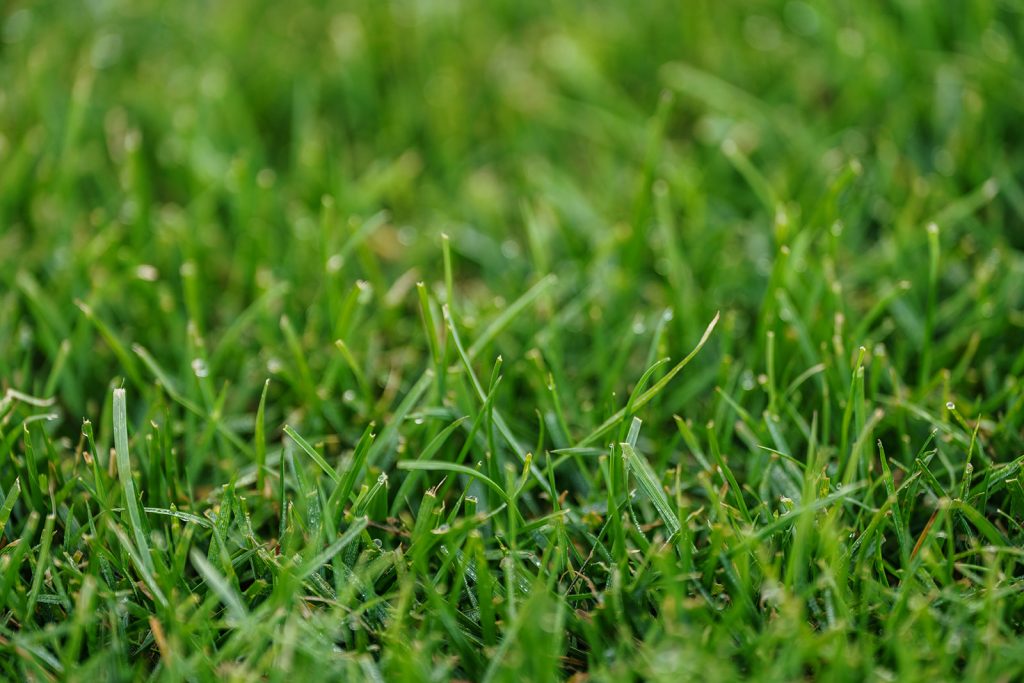
Watering
Undoubtedly one of the most important factors in maintaining quality lawns is the correct management and scheduling of watering. Watering should be targeting at creating a deep root system, while irrigating for lawn health and not just for lawn colour or growth. When you water, how you water and how much you water are all very important factors to not only help you to produce a great lawn but also has an effect on your hip pocket and the environment.
The most common and efficient ways to water your lawn is by using a movable sprinkler or an automatic pop-up irrigation system. Either of these methods of watering when done well delivers even & accurate watering across your lawn. If you are using a portable sprinkler, just be mindful to move the sprinkler around your yard as required to ensure your whole lawn is receiving water evenly. Regardless of what method you are using to water your lawn the aim is to achieve “head to head coverage” or 100% coverage meaning the water from one sprinkler should reach another sprinkler as the most even distribution of water is achieved when this occurs. Timing of watering is also important – to be responsible with water usage and therefore your spend on water its best to water in the morning away from the heat of the day as this reduces evaporation also reduces the risk of leaf diseases within your lawn.
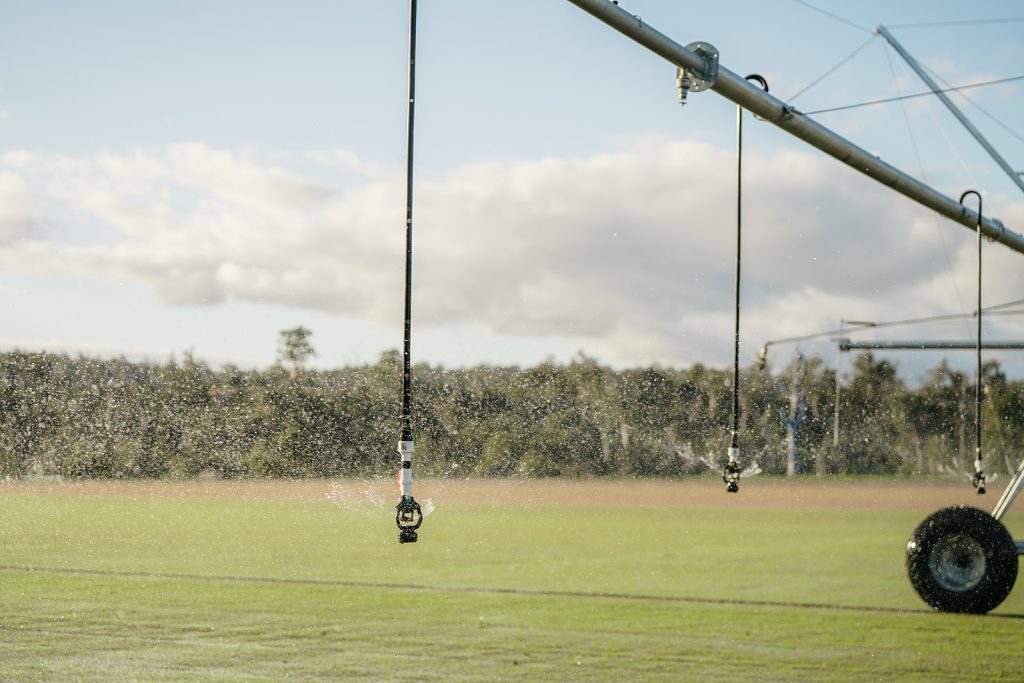
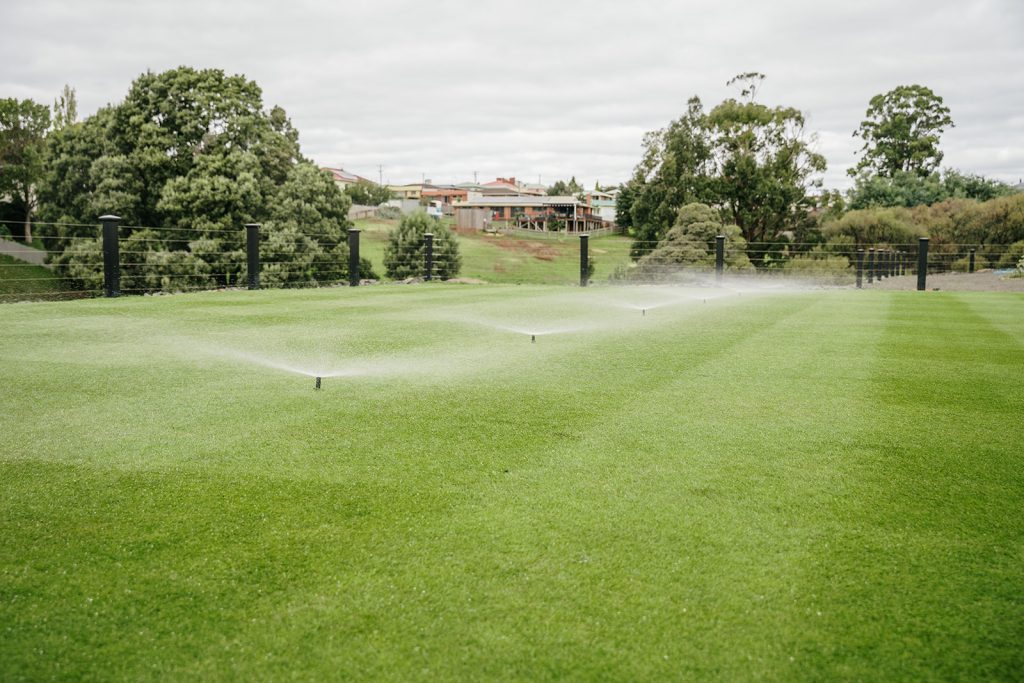
The important factors in putting together a successful watering program are as follows;
- Ensuring each application of water is deep as this encourages the roots of the lawn to grow deep to chase water and ultimately making your lawn more drought tolerant.
- Minimise light frequent hand watering where possible as this reduces the need for roots to grow deep, increases thatch and encourages leaf diseases
- Know your irrigation system & how much it applies, this will ensure that you don’t over water
- Ensuring your irrigation system applies water evenly.
- Knowing your water quality to ensure its not causing your lawn to get sick, its possible to have it tested
- Avoid hydrophobic conditions (avoiding soil drying to the point where its difficult to rewet) This not only results in your lawn presenting poorly but requires even more water for your to return your lawn to a green healthy condition
- Using wetting agents where possible. Wetting agents are a liquid product that can be applied to your lawn to reduce the amount of water they require
Aeration
At some point in time all lawns will become compacted and to achieve a high-quality lawn aeration is needed to improve the health of your lawn. Aerating your lawn helps improve drainage, reduces thatch, allows water, nutrients and oxygen to reach the roots to improve both turf & soil health.
It is recommended that any aeration that is carried out is done during either the Spring or Autum growing seasons to allow the turf to take advantage of the growing weather. In addition to aerating the whole lawn, home owners might just choose to focus on areas that are under stress through excessive use, pest attack, or suffer from excessive shade – aeration in these circumstances will greatly assist in the recovery of such areas. Options to aerate your lawn are as follows;
- Hire a motorised lawn aerator
- Use a standard garden fork
- Use spiked walking shoes purchased from a local garden supplier
- Use a hand corer purchased from a local garden supplier