
Lawn Renovation
Lawn renovation time
A lawn renovation can mean different things to different people, however it is essentially carried out to restore a lawn that is in need of a good overhaul and returning it back to good condition.
A lawn renovation can be prompted by the following reasons;
- Excessive thatch
- Thin grass coverage
- Uneven surface levels
- Poor drainage
- Poor soil health
- Excessive weed populations

It is crucial before renovating to understand the reasons for the deterioration of your lawn, then be sure to set a maintenance program moving forward that will ensure the lawn does not return to the same poor condition in the future, otherwise you may have to repeat the process again in another year or two. The extent and frequency of your lawn renovation will depend on the lawn variety that you have.
In Tasmania, lawn renovations need to be carried out in either spring or Autumn once the weather is consistently warm and your lawn is actively growing – early to mid-October in Spring and Late February to early March in Autumn.
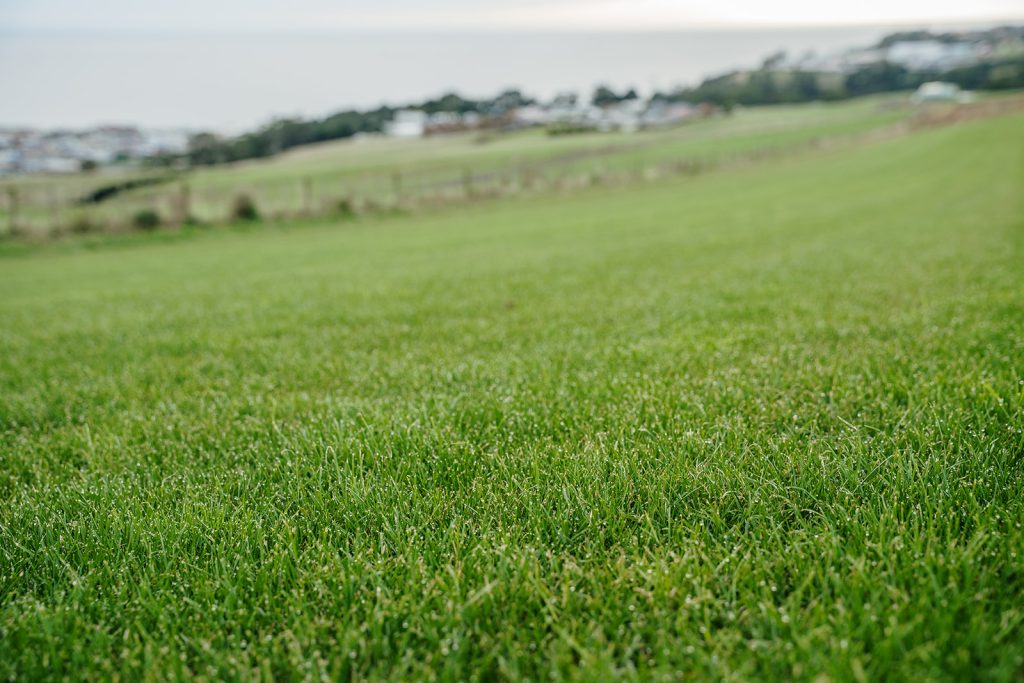
In the world of professional sports turf management thatch is well talked about subject, less however when it comes to lawns. Excessive thatch is one of the main reasons a lawn will require a renovation. Thatch is the layer of organic matter that sits between the grass surface and the soil surface described as the decomposed and undecomposed organic matter. Thatch accumulates naturally as turf grows, generally the faster a grass species grows, the quicker thatch can accumulate. You may remember walking over a lawn that feels spongy under foot? That’s the thatch layer you can feel. Sometimes considered somewhat good in a lawn environment because of the soft feel it can bring to a lawn and this can increase the wear tolerance of the lawn, however, we don’t like the thatch layer becoming too excessive in a lawn because;
- In general, thatch holds more moisture than soil, meaning the grass roots prefer to live in the thatch than grow deep into the soil. This will result in your lawn drying out faster during hot weather
- Excessive thatch increases the likeliness’ that insect and disease will become a problem as both like to live in the thatch layer
- As its soft in nature, it increases the chances of the mower sinking down in the thatch layer and scalping as a result (gouging)
- It reduces the rate your lawn will drain
- It prevents fertiliser from entering the soil profile to encourage the roots to grow deep
As mentioned above there are a few reasons why a renovation of your lawn might be required, with this there are a few slightly different variations of a renovation that can be undertaken. Below is a general description that will meet most circumstances. The renovation process is to scalp the lawn (suddenly, drastically reduce the cutting height) scarify, aerate, fertilise and top dress.
Prior to getting underway with your renovation your lawn must be weed free. Many weeds can be pull by hand or using a weed puller tool. However, if you have a large amount of weeds or persistent weeds such as winter grass, you may have to consider spraying a selective herbicide to eradicate them.
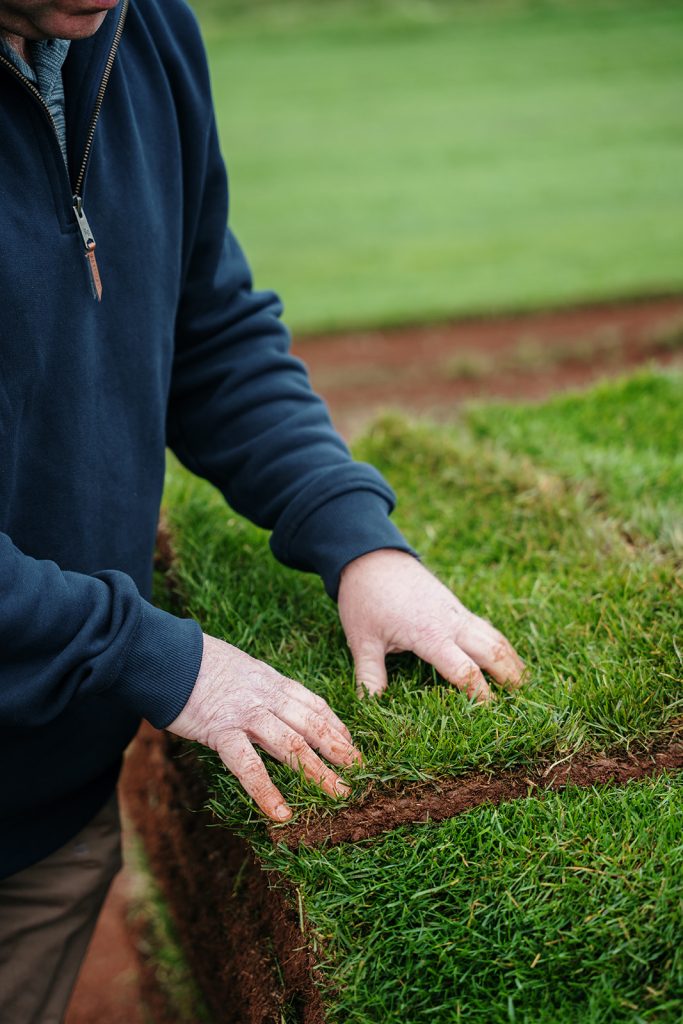
Lawn Renovation Step by Step guide
Scalping
Scalping your lawn down involves mowing your lawn as low as practically possible. The main reason for this practice is to remove old growth and to expose the lower part of the lawn for further steps in the renovation to be more effective such as scarifying and topdressing. Without scaping your lawn down in the first instance, the renovation will not be as successful.
This step can be completed by using your standard lawn mower by mowing the whole lawn. Each time the lawn is mown, the mowing height will need reducing until the majority of greenery has been removed.
You may need to lower the mower and cut your lawn 3–5 times (or more) as part of this process. You do not want to lower your lawn mower too much on the first cut if your lawn is long as this will stall the mower and be difficult to get the mower over your lawn.
Scarifying
Scarifying is undertaken to target the removal of thatch. Scarifying also stimulates new growth during recovery after the renovation is done. Scarifying is best explained as vertical mowing, where the blades move in a vertical fashion rather than your usual horizontal mowing action. As such the blades cut through your lawn’s surface pulling thatch out. The blades should be set all the way through the thatch, the easiest way to ensure this is taking place is when scarifying there should be a small amount of soil coming from the machine as the blades go through the thatch and touch the soil. A scarifying height can be anywhere between -5mm to -20mm deep, depending on each individual situation. Ideally it will be carried out in two different directions to maximise its effect.
Ideally a scarifier would be hired from a local supplier or have a contractor do it for you. If this is not possible a steel rake can be used to rake the surface aggressively removing the dead grass from your lawn. This is not as effective, but still worth doing.
Once scarifying is complete your mower must be used to remove the scarifications which will be mostly debris and loose mulch. Prior to moving on your lawn must be completely clean from loose material – mowing needs to continue until this is achieved.
Aeration
Air is an important component for your lawn to be healthy. Although aerating lawns is not that common and usually restricted a professional turf environment, if your lawn can be aerated the benefits will show in your lawns overall health. Aeration can be done in many forms, the focus is to create opportunity for air, nutrients and water to enter your lawns soil profile. It helps to protect your lawn against a lot of common problems due to compaction such as drainage issues, thin areas, weeds, dry patches and both root and leaf diseases. There are a few different ways you can aerate your lawn and the size and level of compaction of the area will help to choose what method will be most suitable. A smaller area of lawn can be aerated manually with aerating sandals from a local garden centre or a good quality garden fork. Simply push the fork into the lawn and wriggle it back and forth to break up the soil profile. Aim for a spacing between the holes of around 8 – 10cm. You may need to go over the area twice in a different direction each time to achieve sufficient aeration. For larger areas, you can hire motorised aerators or engage a contractor to do it for you. If your area is heavily compacted, you might need to consider core aeration. Unlike regular aeration, where solid tines simply punch holes in the ground, core aeration removes a plug of soil from your lawn at the same time leaving a larger hole and an opening for nutrients to move through.
Top Dressing
Topdressing is the final step of a lawn renovation to help correct poor soil condition, and to fill in low or uneven areas in the lawn. It also helps your now scalped lawn to recover and grow back even. It is important to use a clean washed sand to top-dress such as river sand or a top-dressing loam mix. Spread your topdressing material evenly across the whole lawn area, once it is allowed to dry then either level lawn or broom it into the lawn profile.
At this stage of the renovation, consideration needs to be given to applying more seed to your lawn or not. Applying new seed is something that should only be done if there are bare areas that will not recover or grow back on their own. It’s important that you choose the seed that is the same as your existing lawn grass. Seed can be spread across the whole lawn or just in bare or thin areas as required.
Other things to consider with your topdressing;
- Do not top-dress your lawn if rain is forecast as the wet weather will make the top-dressing material difficult to level & rub in – if the work can be fully completed before the rain starts this is the best outcome.
- Usually about 1/3 of a cubic meter of topdressing material covers 100m2 of lawn area.
- Never cover your grass too excessively, making sure the grass tips are still exposed. Its better to break your topdressing up into two applications over time than over apply topdressing material.
- Make sure your topdressing material is rubbed in by either level lawning or brooming as much as possible so the grass can be exposed to sunlight to speed up the recovery process
Fertilise
The lawn renovation process can be quite stressful on your lawn and therefore it needs fertilising to help it repair and regrow. It is recommend to apply a quality controlled release granular fertiliser for a continuous allocation of important nutrients throughout the recovery period. During this stage is also a good time to address any fundamental issues in your soil and apply additional products as needed. A soil test ahead of your renovation can determine what fertiliser products your lawn really requires.
Watering
Watering is the final step in completing the renovation and a very important step. Its important to give your lawn a long deep water immediately after topdressing and fertilising to ensure the applied fertiliser is activated and to further push the topdressing material further down into the grass. Consistent ongoing watering is important to continue to push the recovery over the following week. Once you notice new growth, you can start to slowly back off your watering again until you are back into your normal routine of deep watering 1-2 times per week. When your new lawn is showing enough growth to justify a mow, mowing can restart in the normal routine. Mowing is important during the full recovery phase as it encourages the grass to grow laterally.
A full lawn renovation could be reduced down to every second year, depending on many factors aswell as the expectations of the homeowner. It’s not a must to carry out all the steps within the renovation, for example topdressing or scarifying can be carried singly but it can be highly beneficial to undertake all steps if you are looking to achieve the best results with your lawn.