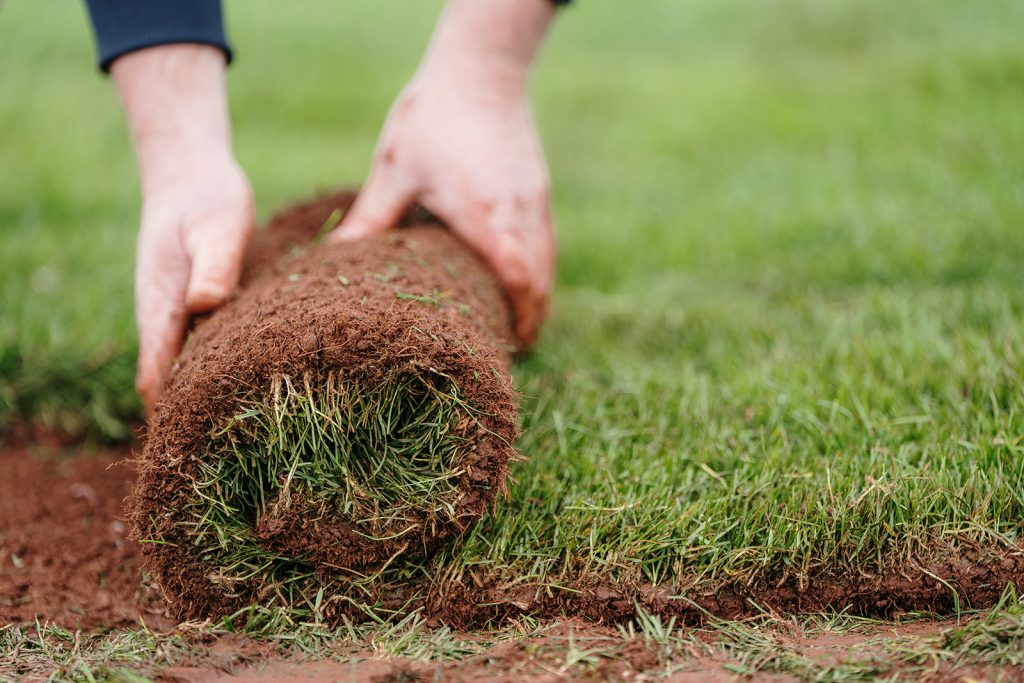
Prepare My Lawn
Soil preparation is a key part of establishing a healthy, vibrant lawn that will survive long term. Planning this part of the process should be done carefully and thoughtfully. Regardless if the lawn is being built from scratch or a refurbishment, preparing the soil well will set the lawn up for success for many years to come.
Early grunt work
The first step is to remove anything foreign including weeds, debris, roots and unwanted vegetation generally. This can be done using excavation machinery or by hand. Sometimes a non-selective herbicide is required to be used as part of the process to ensure that any unwanted weeds or grass does not grow back over time.
Getting your soil into shape
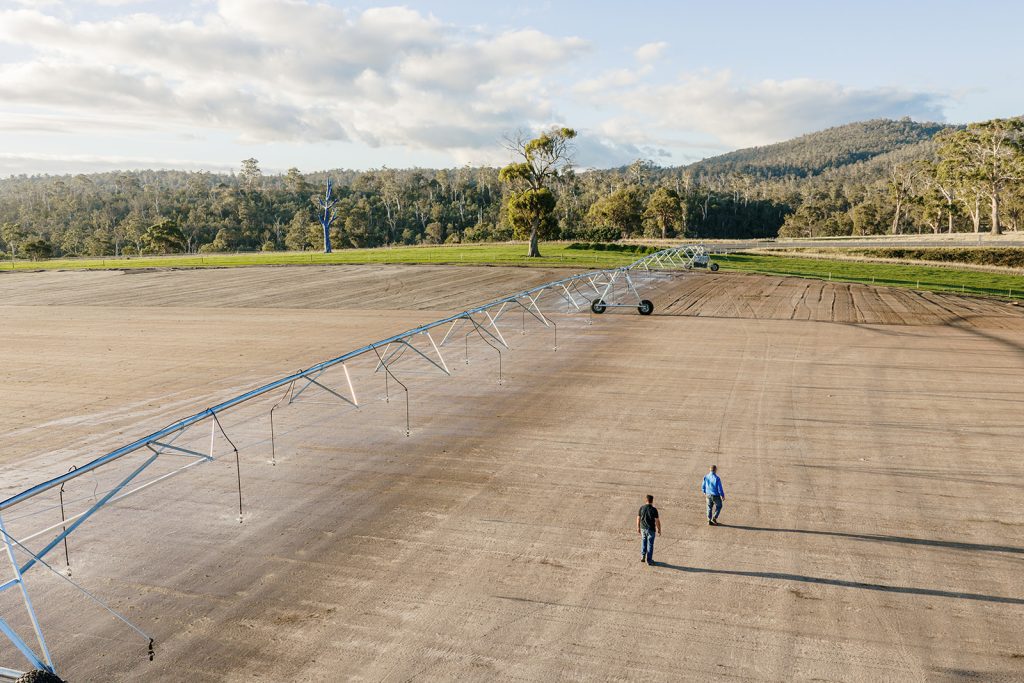
Once your area has a clean, weed and debris free look it is time to cultivate your soil. Its important to loosen your soil to a depth of about 100mm. This can be done by hand (although its hard work) or by using a machine such as a rotary hoe. Following this process not only loosens the soil allowing it to be worked around, including taking off the high areas and moving it into the low areas, it also aerates the soil as part of the process. By taking the time to follow this process ultimately allows a smooth surface to be created which in turn ensures your new lawn achieves a nice finish once laid.
Take the opportunity to enrich your soil
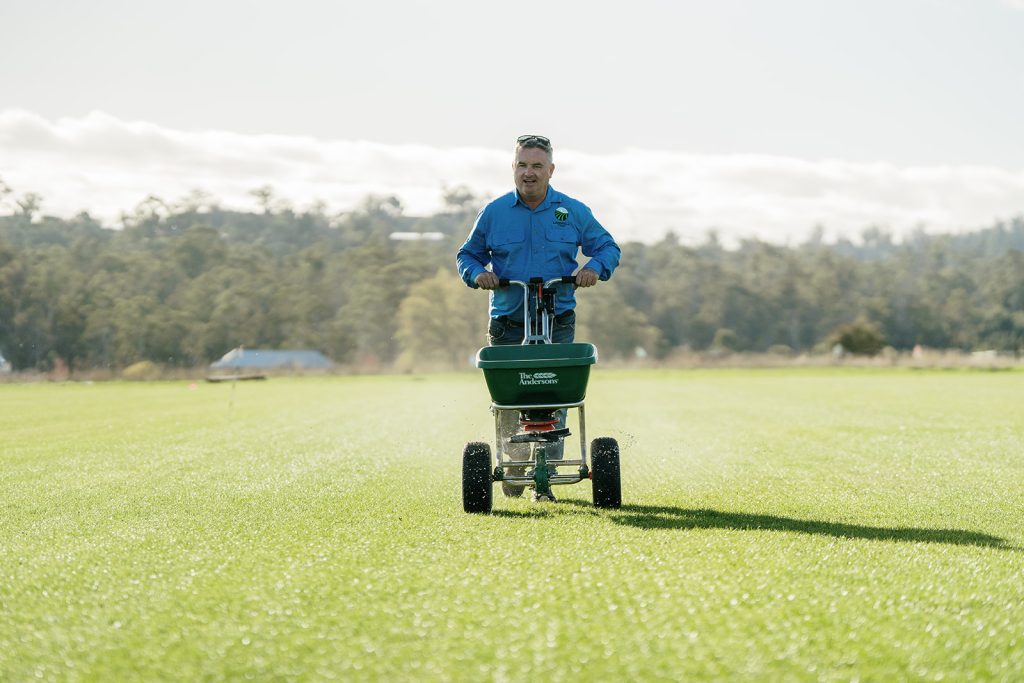
While your soil is in a loose state a balanced NPK fertiliser should be added to your soil to ensure the turf is provided with the best start to increase the rate the turf establishes while enhancing the growth of the root system. There are many other products that could be added to your soil at this stage such as gypsum, lime, dolomite, organic fertiliser, plus many others. To truly know what the best products to add is best determined by a soil nutrient test. Regardless of what fertiliser or amendments are added to the soil it is important to incorporate them into the soil profile – this can be done using a rake or an additional pass of a machine such as a rotary hoe. The aim here is to incorporate the products into the soil so the majority of the fertiliser is not in contact the new turf’s root system ensuring there is no chance of burning the roots of the grass, while at the same time encouraging the roots of the grass to grow deep into the soil to chase the nutrients.
Final preparation
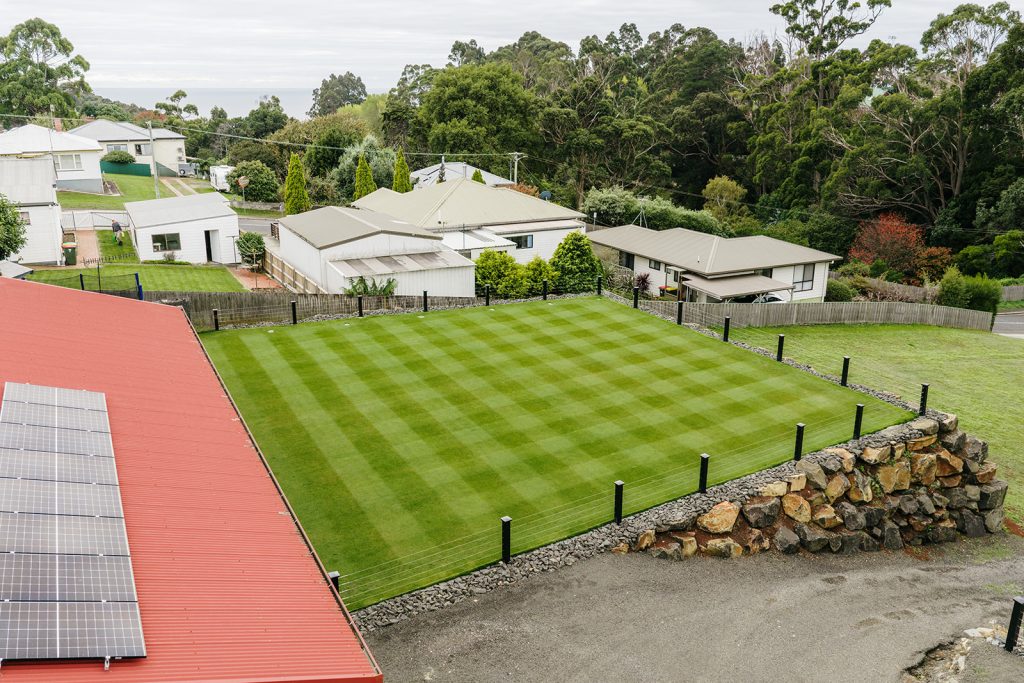
Once all the soil preparation work is finished in principle, further care needs to be taken to ensure the surface is 100% smooth and even – this ensures there are no low areas where water can pool resulting in the lawn becoming soft and muddy. It is also important to ensure soil is shaped and graded in a way that water moves in the preferred direction such as away from the house.
As part of the final leveling process its important to ensure that soil levels match in well with hard surfaces such as paths and lawn edging. The general recommendation is to leave the final level of the soil no more than about 20mm below paths. This ensures that the transition of levels from paths to the lawn surface is smooth, even and continuous once the lawn is laid. Ultimately ensuring all surfaces are safe & user friendly.